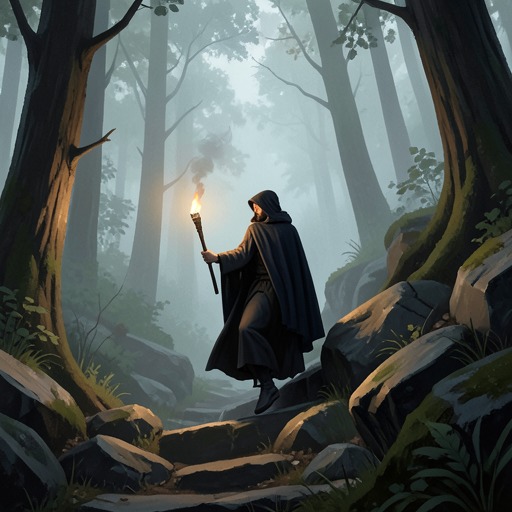
The warlock replaces his heart and kills the maiden
The Tales of Beedle the BardThe warlock’s replacement of his heart is the decisive reversal in “The Warlock’s Hairy Heart.” He restores the organ because the maiden believes this will heal him and allow him to know love; instead, the heart’s long isolation has left it strange and overpowering. The maiden dies, and the warlock dies trying to rid himself of the heart once more. The scene turns a promised cure into catastrophe, making the tale’s dark argument about emotional self-denial and its consequences inseparable from its ending.
The Return of the Heart
The maiden finds the warlock’s beating heart preserved in an enchanted crystal casket. Its condition reflects the long period during which it has been cut off from ordinary human experience. Frightened by what she sees, she asks him to put it back where it belongs. Her plea gives the warlock a reason to reverse his earlier decision: he acts to please her, and she believes the restoration will make him capable of true love.
The return is therefore framed as an act of repair, but the story does not present the heart’s restoration as a simple return to health. The organ has been removed from the warlock’s life for so long that putting it back cannot restore the person he might once have been. The maiden’s hope and the warlock’s compliance lead directly into a change neither of them can control.
A Cure Becomes a Reversal
Once restored, the heart responds to the maiden’s closeness with force, but not with the tender love she expects. Its appetites have grown powerful and perverse during its long exile. The contrast is central to the reversal: the action intended to make love possible instead releases a heart whose desires have developed apart from the warlock’s ordinary senses and relationships.
The guests at the feast first notice that both the warlock and the maiden are absent. As time passes and their concern grows, they search the castle and discover them in the dungeon. The maiden is dead, and the warlock is holding her heart while trying to remove his own shrunken one. The scene reveals the cost of the attempted cure through the guests’ discovery: the private act that began in hope has become a death that others must witness.
The Failed Attempt to Regain Control
The warlock tries to use his wand to draw out the heart he had restored, but it will not relinquish its hold on his senses. He then casts aside the wand and takes up a silver dagger, declaring through his actions that he will not be mastered by his own heart. The shift from magic to physical force marks the failure of the solution he had chosen: neither the earlier removal nor the attempted magical reversal has made him master of what he feels.
For a moment, he appears triumphant, holding two hearts. That brief image of victory collapses when he falls across the maiden’s body and dies. His effort to overcome the heart ends not in freedom but in his own death, beside the person whose request had prompted him to restore it. The ending closes the episode with both the hoped-for healing and the warlock’s renewed attempt at control made irreparable by the violence of their outcomes.
Place in the Tale
This episode supplies the decisive consequence of the warlock’s earlier choice to live without his heart. Its removal had been intended to shield him from vulnerability; its return does not undo that choice or restore a safe capacity for love. Instead, the isolated heart’s distorted appetites turn the maiden’s hope of healing into tragedy, and the warlock’s last effort to reject the heart brings about his death as well.
The tale’s ending also stands apart from the more reassuring moral patterns associated with Beedle’s stories for young witches and wizards. Beedle’s stories often make virtue and wickedness legible through reward and punishment, but this episode offers no happy resolution for the maiden or the warlock. Its force lies in the gap between the maiden’s belief that restoring the heart will heal him and the lethal result she and the guests discover. The event makes the tale’s emotional warning concrete: shutting out feeling does not ensure control, and recovering what was rejected may come too late to prevent harm.